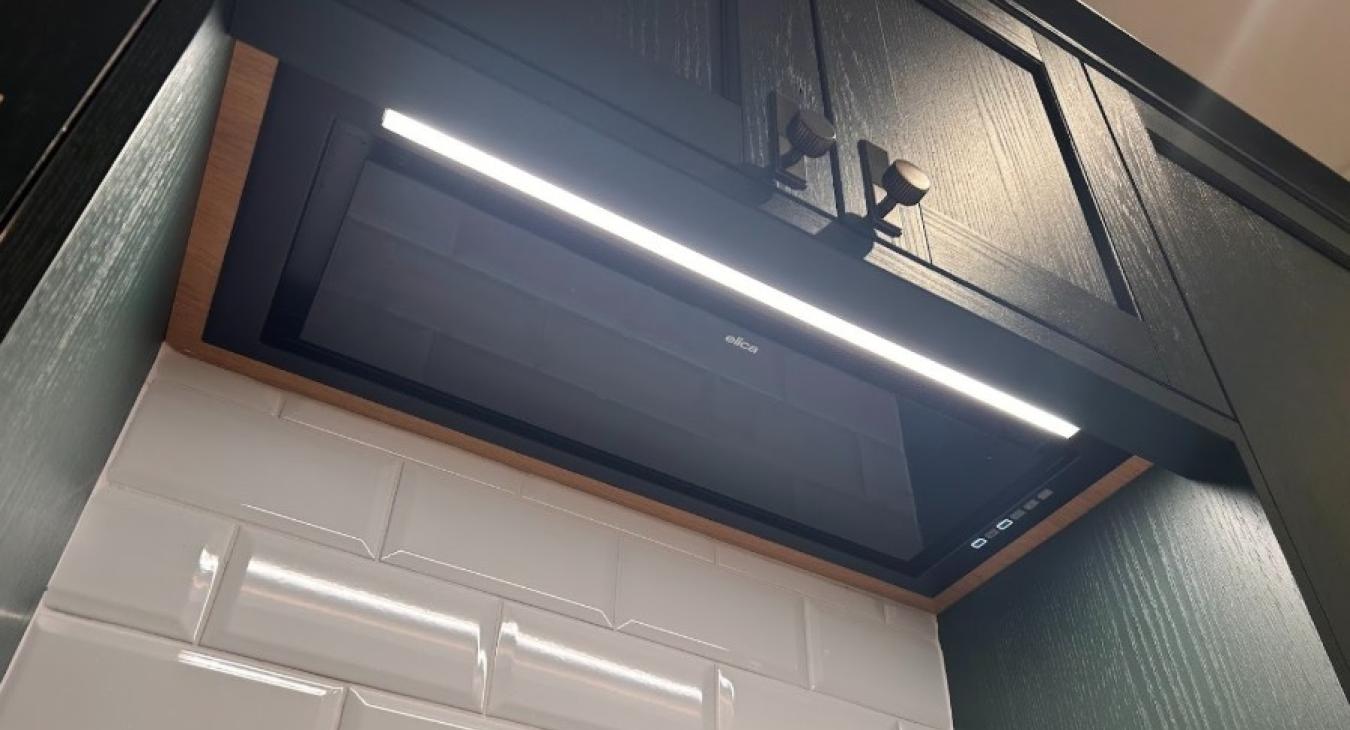

This job was all about fixing a cooker hood that simply wasn’t working as it should.
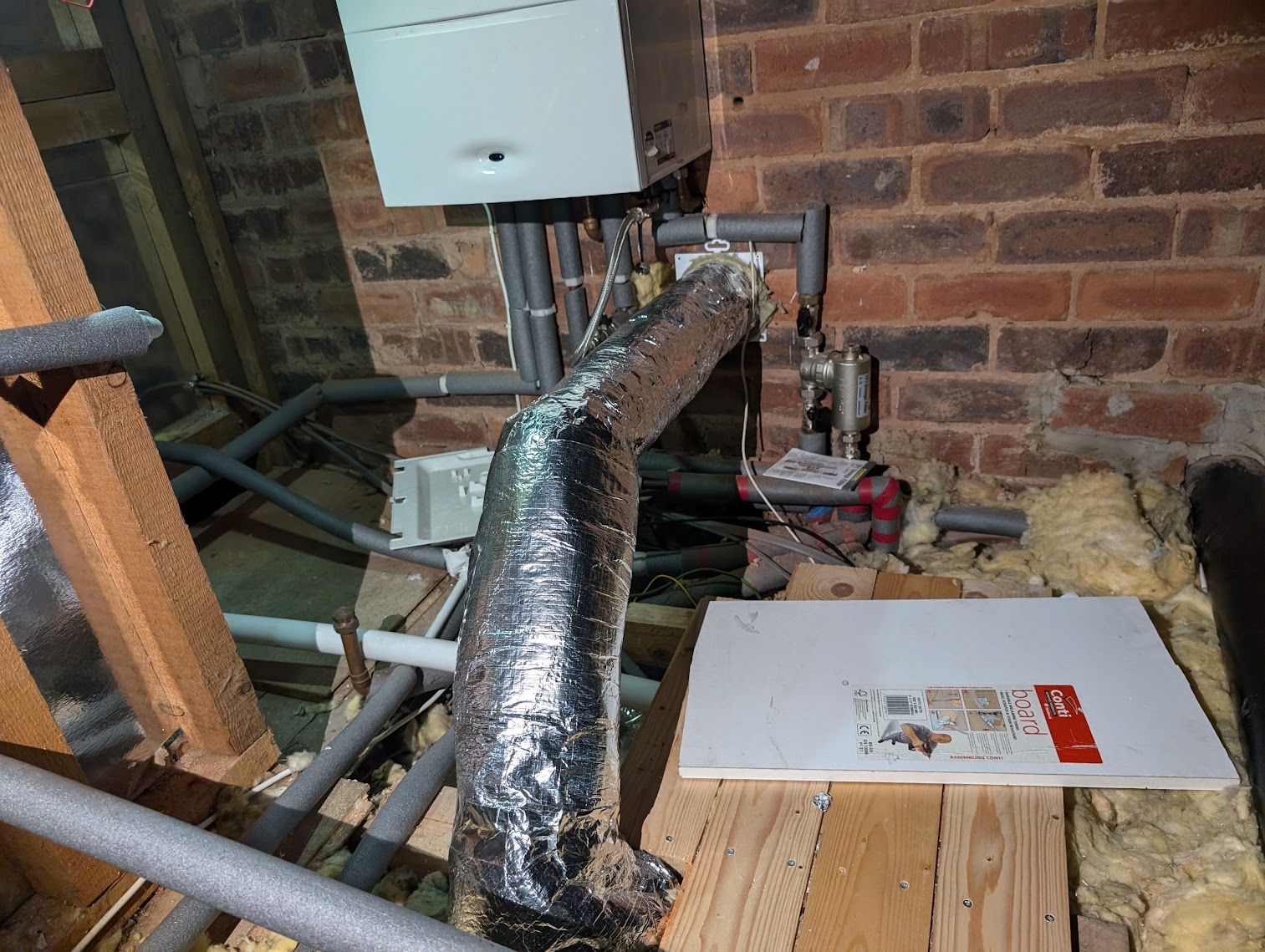
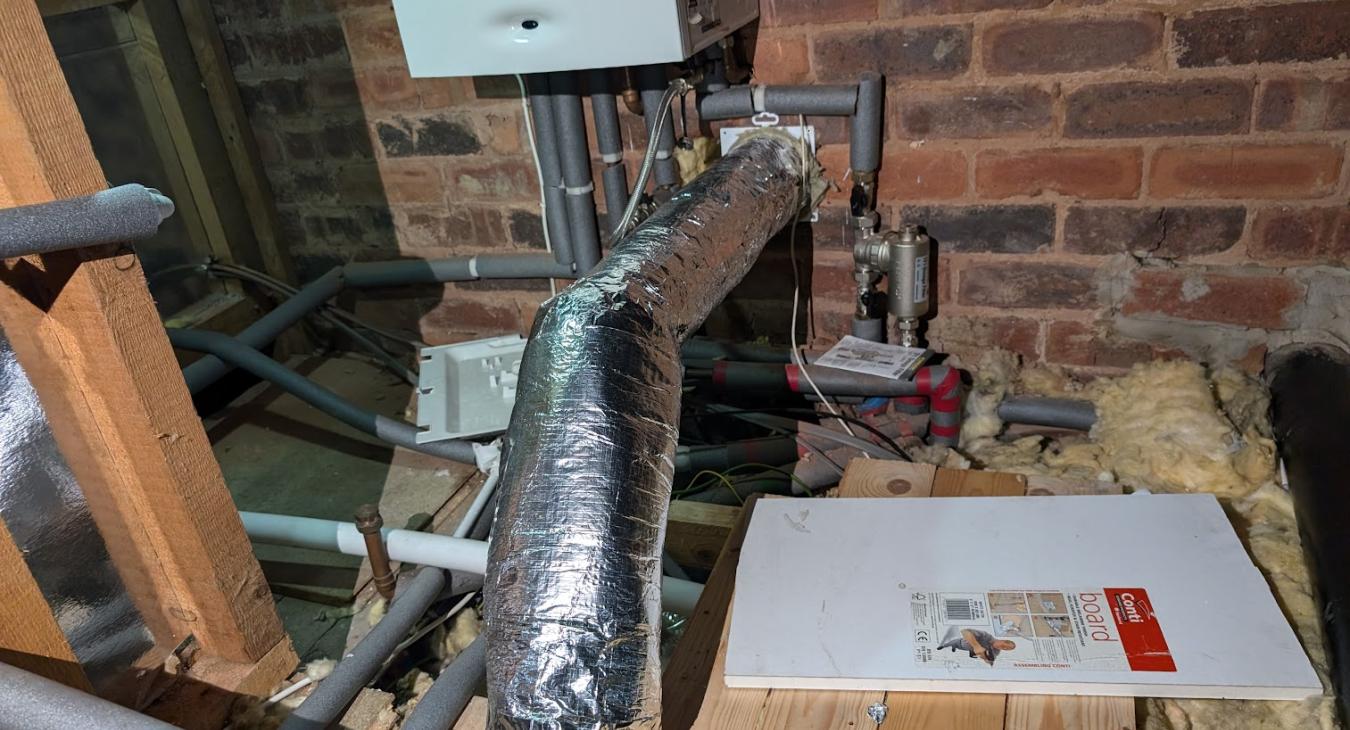
The customer already had a cooker hood installed, but the extraction performance was poor and the kitchen was still filling with moisture and cooking smells. When I took a look, the issue became clear very quickly – the existing cooker hood pipework had been poorly installed, with flexible ducting loosely run across other services and offering very little airflow.
To make things more challenging, the existing hole for the cooker hood ducting was positioned tightly between boiler pipework and the central heating system. It wasn’t a straightforward route, and careful planning was needed to avoid damaging existing services while still achieving proper ventilation.
I removed the old flexible pipework and installed correctly sized rigid ducting for the cooker hood, routing it neatly up through the roof space and out to the external wall. The ducting was fully insulated to prevent condensation forming inside the pipe, which can otherwise lead to moisture dripping back down into the cooker hood.
On the outside, I fitted a suitable external exhaust grille, designed to allow air to exit freely while protecting the duct from weather and pests. Correct termination is just as important as the ducting itself when it comes to cooker hood performance.
Once installed, the difference was immediate. By using the correct duct size and materials, we effectively doubled the amount of air the fan could push through the ducting and out of the kitchen. The fan now removes moisture properly from the kitchen and, as a bonus, the noise level has dropped significantly because the fan no longer needs to work as hard.
After installation, everything was fully tested using specialist ventilation testing equipment to confirm airflow and performance.
It was a tricky installation with a few obstacles to work around, but the end result was a cooker hood that now works exactly as it should – quiet, efficient, and properly vented to the outside.